
By Alexis Krigger, MS, BCBA, LABA

Many parents ask: “Am I bribing my child to behave?” “Isn’t positive reinforcement just bribery?” These questions usually come from parents who are trying their best and are stuck reacting to challenging behavior in real time. The short answer is: Reinforcement works. Timing determines whether it helps or hurts. Understanding the difference between bribing and positive reinforcement can reduce power struggles, prevent meltdowns, and help children learn what actually works long term.
What Parents Usually Mean When They Say “Bribing”
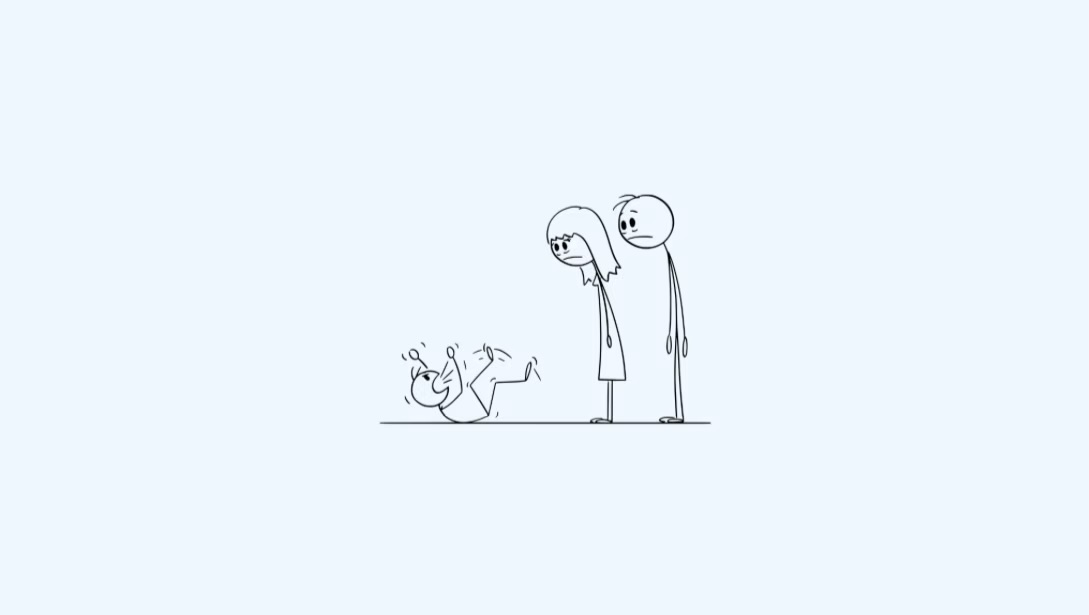
Most parents use the word bribing to describe moments like this: 1. A child is yelling, refusing, or melting down. 2. A parent says something like “Okay, if you stop, you can have the iPad” 3. The behavior stops (at least temporarily). Everyone feels relieved. It feels effective because the problem behavior ends. But behavior science shows that what happens next time matters more than what happens in the moment.
Why Bribing Makes Challenging Behavior More Likely
When a reward is offered after a child has already escalated, two learning processes occur:
- Challenging Behavior Is Reinforced
The child learns: “When I escalate, I get something I want.” This increases the likelihood that challenging behaviors like tantrums, yelling, refusal, aggression, or other disruptive behaviors will happen again. Oftentimes, these behaviors will happen faster and more intensely next time.
- Parents Are Reinforced Too
Parents learn: “If I give in, the behavior stops.” That relief (i.e. quiet, compliance, calm) is negative reinforcement for the parent. It makes giving in feel necessary, even when it doesn’t align with long-term goals.
This creates a cycle many families feel stuck in.
What Is Positive Reinforcement (When Used Correctly)?
Positive reinforcement is not bribery. The difference is when the reward is introduced.
Positive reinforcement works best when:
- Expectations are stated before the situation
- The child knows exactly what behavior leads to the reward
- Calm, appropriate behavior, not escalation, is reinforced
Same Reward, Different Outcome
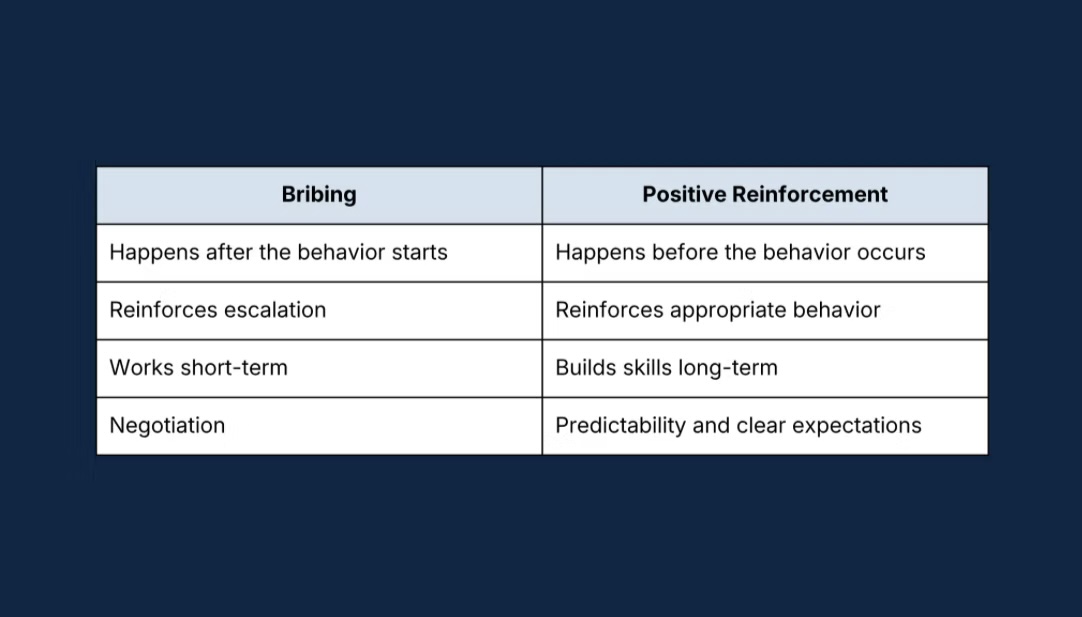
Bribing (reactive): “If you stop screaming, you can have the iPad.”
Positive reinforcement (proactive): “When we finish shopping without yelling, you can have the iPad in the car.”
You’ll notice this is the same reward, but completely different learning. In the first example, regardless of the parent’s intention, the child learned that if they scream their parent will off them time with the iPad. In the second example, the child learns: “If I stay calm and follow expectations while we are in the store, I earn something I value when we are done shopping.”
When reinforcement is planned ahead of time, children know what’s expected, feel more in control, are less likely to escalate, and learn skills they can use again. Additionally, parents experience fewer power struggles, less guilt and frustration, more predictability, and more follow-through.
Bribing vs Positive Reinforcement: A Quick Comparison
This Applies to All Humans, Not Just Children
These principles aren’t specific to neurodiverse children or even to children in general.
Adults respond to reinforcement the same way. We work for paychecks, meet deadlines for bonuses, avoid tasks when consequences feel unpredictable, and overall respond better when expectations are clear. The same science explains other areas of life such as workplace motivation, classroom behavior, relationship patterns, and habit formation.
What If the Behavior Has Already Started?
Once a child is already escalated, the priority becomes safety and regulation. Teaching is limited in that moment, and parents may need to help the child calm down first. The real change happens later, when parents adjust expectations, add structure, offer reinforcement earlier, and reduce triggers before the next situation. This sort of planning is called utilizing antecedent strategies. We can’t be perfect every time, but each situation can give us insight into how to respond better next time we are in a similar situation.

Final Takeaway
Before offering a reward, ask: “Did I offer this before or after the behavior started?” If offered before, you’re teaching. If offered after, you’re negotiating. Reinforcement is not the problem, timing is. When parents move from reacting to behavior to preventing it, they stop reinforcing meltdowns and start reinforcing skills that children can use at home, at school, and in the real world. If parenting feels like constant bargaining, it doesn’t mean you’re doing it wrong, it may simply mean the system needs support. That’s where evidence-based guidance can help.
Subscribe to NBI Exposure for more articles on clinical practice and evidence-based treatment.